Media
In the media
‘Let the old politicians run against you. It will restore your political independence and make you unbeatable.’
Lord Mark Malloch-Brown is an international affairs commentator, author and keynote speaker whose media work explores geopolitics, global governance, international development, political change and the changing world order. This page brings together his interviews, podcasts, articles, books and other media appearances.
In the Media
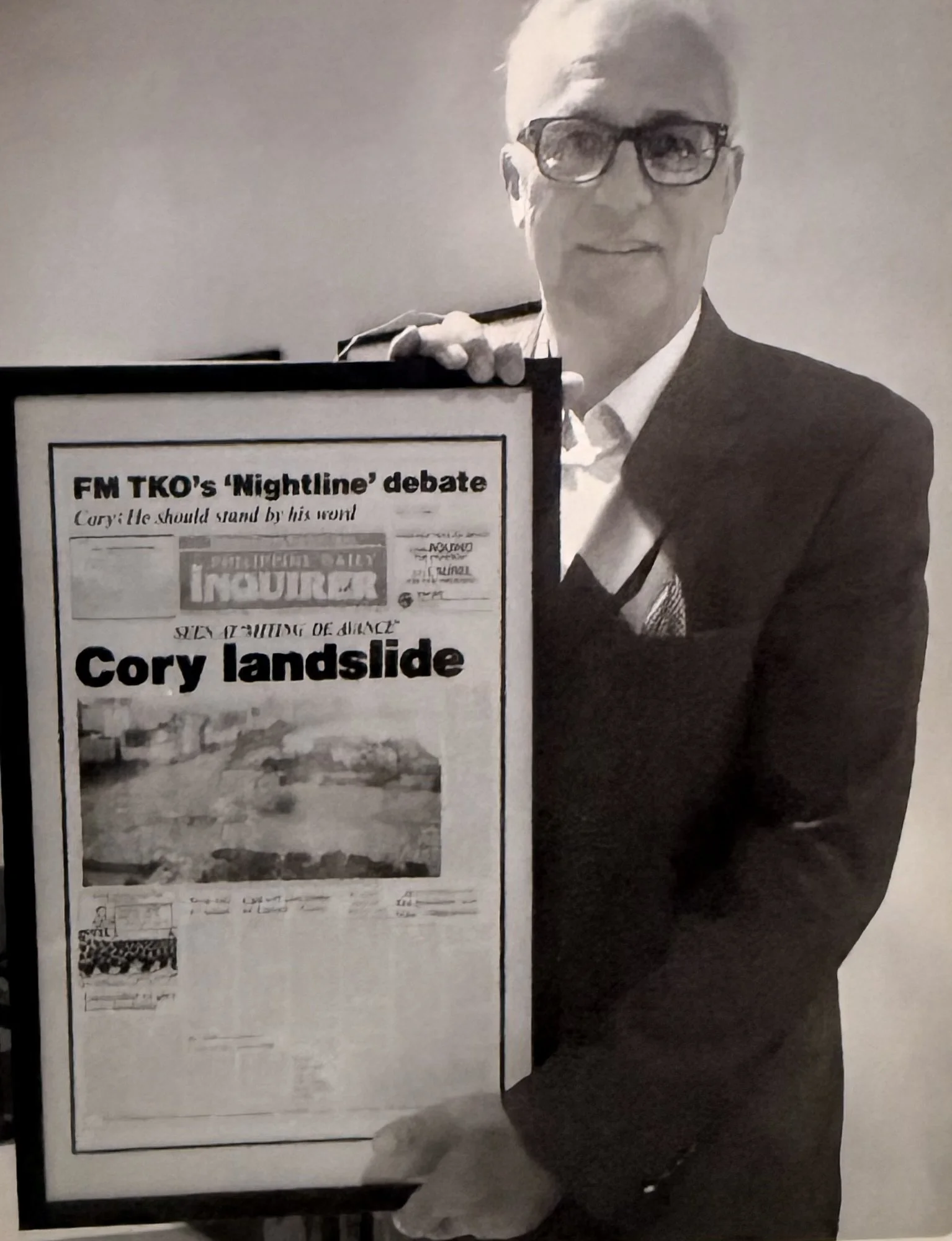
The Observer UK: The Observer brought me closer to my father and his homeland
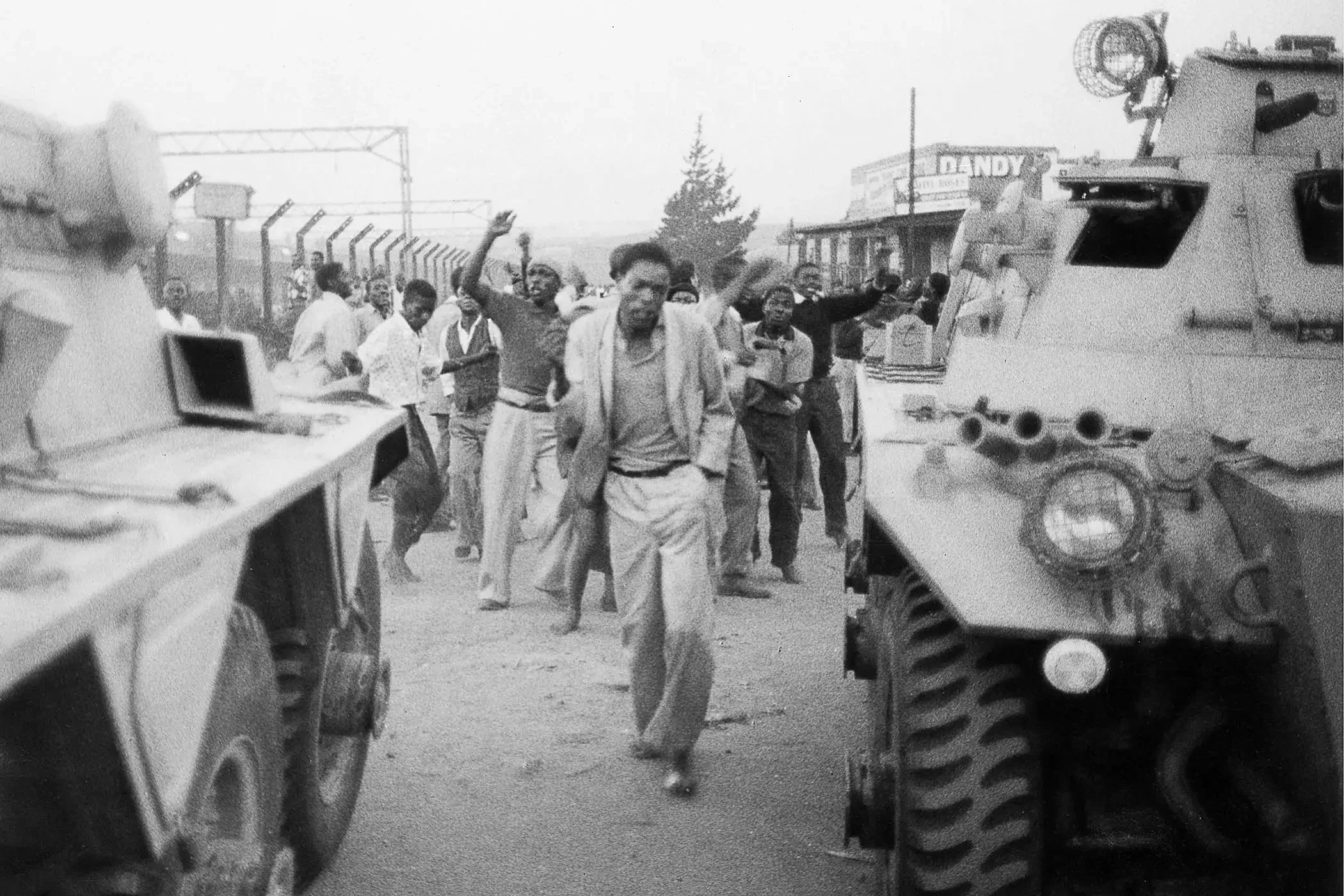
As he becomes this newspaper’s chairman, the former diplomat Mark Malloch-Brown explains how its coverage of apartheid inspired his career in development – and why he’s committed to helping the paper and website flourish
Financial Times: The Observer raises £10mn in boost to turnaround effort
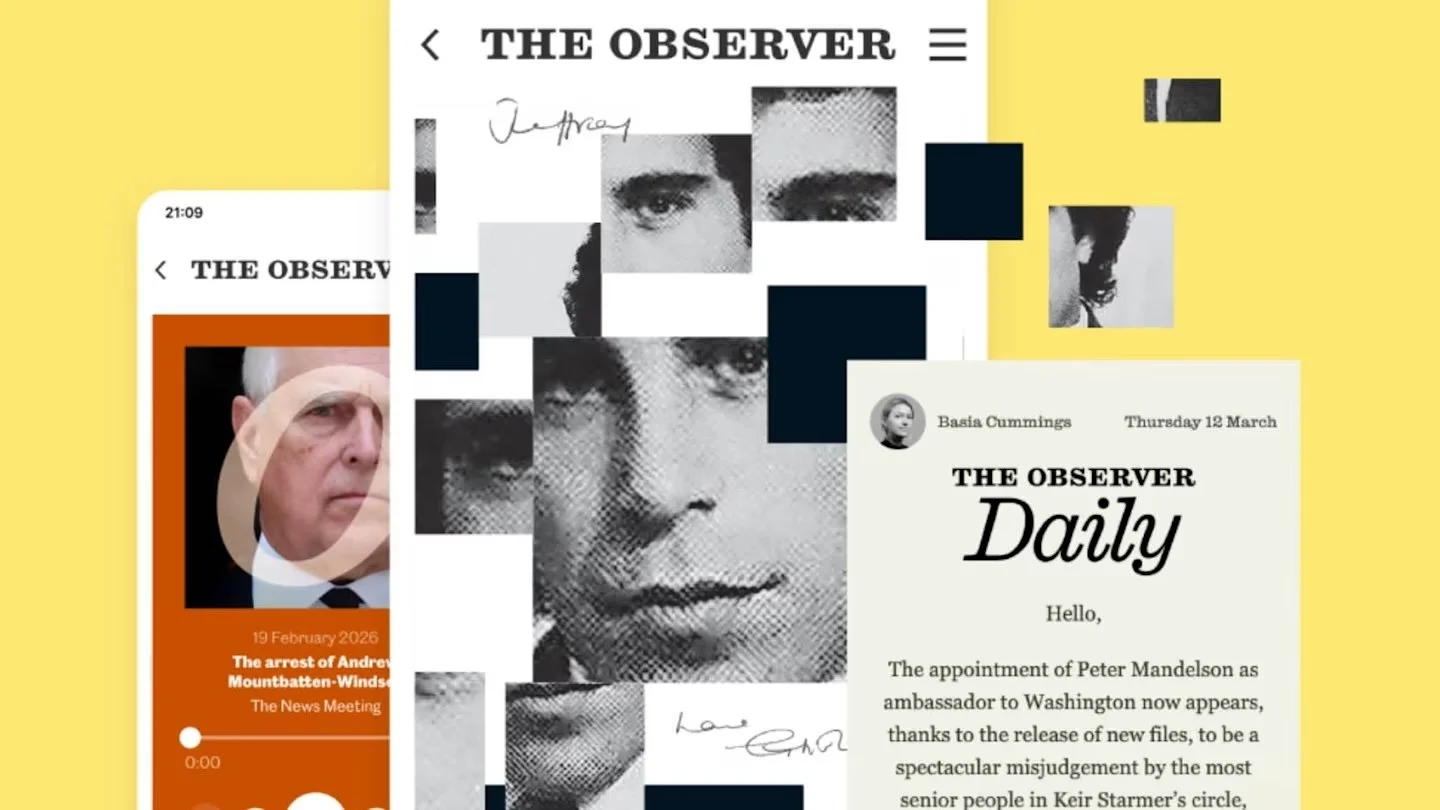
Lord Mark Malloch-Brown has been appointed as chair of the Observer
International Crisis Group: 30th Anniversary
2025 marks Crisis Group's 30th anniversary. Over the last thirty years, we have made great strides focusing on conflict resolution, preventing and addressing conflict wherever our organisation finds it. But as we celebrate this significant milestone, new challenges lie ahead, and our work remains essential at a moment of danger and discontinuity for the world.
The Road To International Cooperation
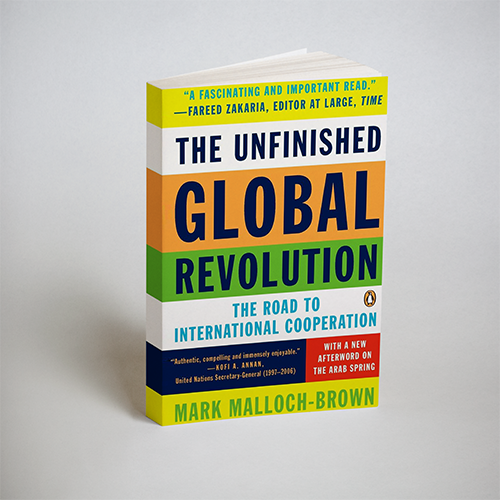
The Road To International Cooperation
The Unfinished Global Revolution chronicles how over the past few decades, domestic problems - from unemployment to environmental distress - have international roots. Increasingly, ad hoc arrangements between NGOs, civil society and the private sector are filling in the gap created by the failures of individual governments. Malloch-Brown urges us to embrace these evermore powerful international institutions and the values needed to underpin a truly globalist agenda - the rule of law, human rights, and greater opportunity for all. Now is the moment for creative statesmanship to form a new approach to global politics, one that will produce stronger international institutions that revive rather than replace national governments.
Malloch-Brown has been at the centre of recent world events. Drawing on his experiences at the frontlines of international development - from Cambodia to Darfur, Washington to UN headquarters - Malloch-Brown provides a personal, on-the-ground view of seemingly abstract challenges and forecasts the way forward in global politics. This book should be required reading for all policy makers, politicians and concerned citizens of the world.
Rich in both analysis and recommendations, Mark Malloch-Brown deploys his enormous talent and shrewd understanding of the forces that are shaping our world to argue for stronger, more inclusive global institutions. Drawing from a wealth of personal experience on the frontlines of world affairs, Mark's book is authentic, compelling and immensely enjoyable. His message should resonate in national and international discourse for years to come. — Kofi A. Annan, United Nations Secretary-General (1997-2006)
In this wise and passionate book, Mark Malloch-Brown draws on his remarkable experience at the global frontlines to illuminate both the challenges of international governance and the reasons why we cannot afford to give up on it. — Queen Noor
Mark Malloch-Brown is one of those rare statesmen who is also a public intellectual. This book combines these two qualities, making for a fascinating and important read. — Fareed Zakaria, Editor-at-Large, Time, and author The Post-American World
The provision of international public goods will be a defining issue of the 21st century. This rare view from inside the kitchen shows why it is such a daunting challenge. — Paul Collier, author of The Bottom Billion
In this exemplary memoir of an exemplary global life, Mark Malloch-Brown has put the phenomenon of globalization and the challenges it poses for national and international governance into an historical, ethical, and prescriptive context that makes this a handbook for understanding and shaping our world. — Strobe Talbott, author of The Great Experiment
Mark Malloch-Brown, who had the advantage of working closely with Kofi Annan, is a man of extraordinary talent. This book demonstrates that he is one of the most influential thinkers today on how to cope with the globalization that is rapidly transforming the world economy. This is an important book; it is in fact a tour de force. — Jagdish Bhagwati, University Professor at Columbia University and author of In Defense of Globalization
The clash that will really matter, contends Mark Malloch Brown in this admirable book, is between international co-operation and old-fashioned nationalism...The author's conclusions remain cautiously optimistic. With every international agreement...we may be moving...towards the global revolution he advocates so eloquently. — The Economist
A distillation of thoughts about the need for international institutions and politics to rise to meet global challenges...What is attractive about Malloch Brown's book is the combination of detail, authority and humility derived from decades of trying to make international co-operation work. — Alan Beattie, Financial Times
A rather extraordinary debut: part autobiography, part political tract, part polemic, all bound together by a pilgrim's progress of learning experiences...You won't find a more stimulating thesis around this year. It's passionate, perceptive and rooted in years in the trenches of global strivings. — Peter Preston, The Observer
This, after three decades of international toil, is [Mark Malloch Brown's] first book, and a rather extraordinary debut: part autobiography, part history, part political tract, part polemic, all bound together by a pilgrim's progress of learning experiences... You won't find a more stimulating thesis around this year. It's passionate, perceptive and rooted in years in the trenches of global strivings — Peter Preston, Guardian
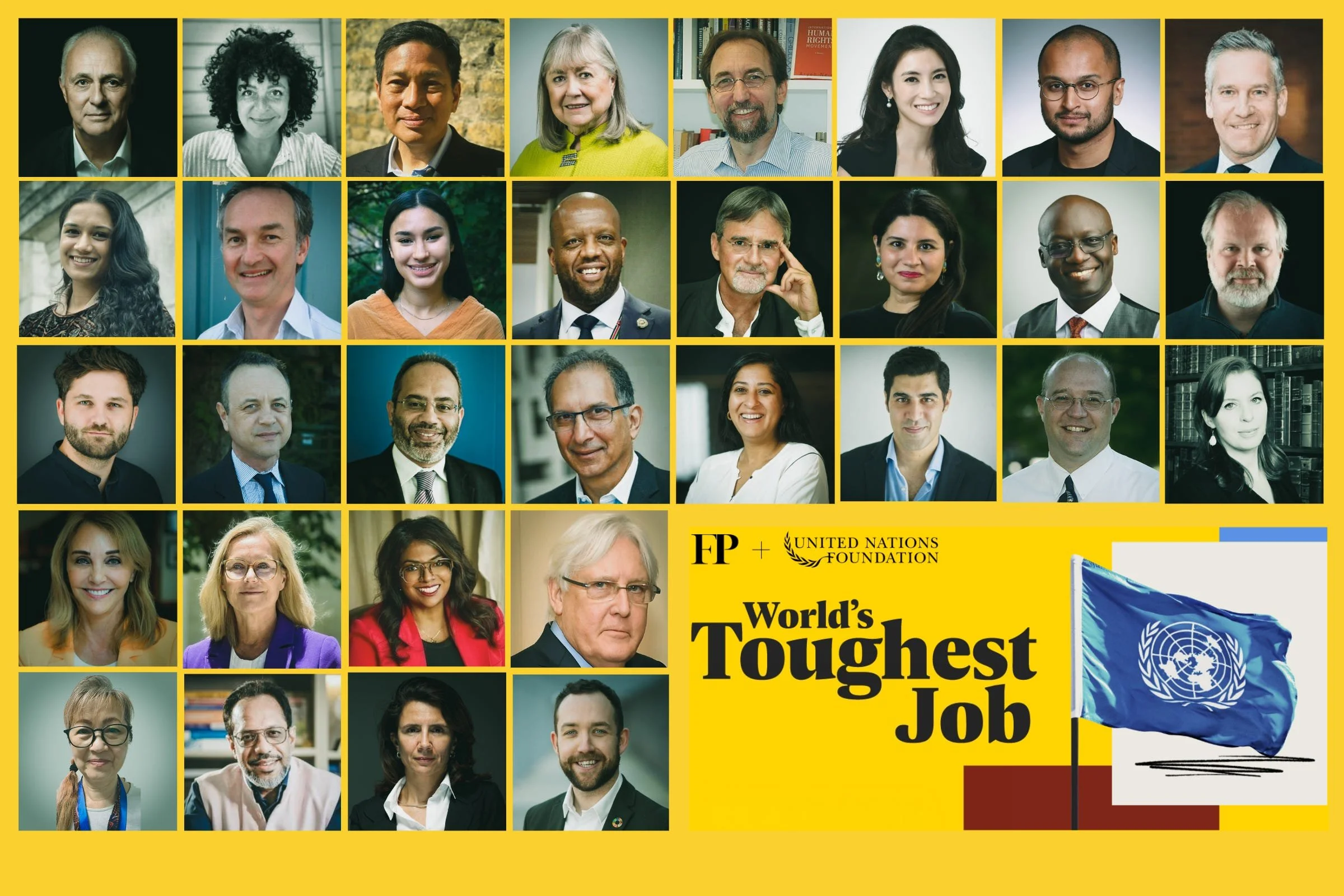
World’s Toughest Job Podcast
World’s Toughest Job is an eight-part series, co-produced by Foreign Policy and the UN Foundation.
Join host Jasmin Bauomy and co-host Mark Malloch-Brown to explore the challenges facing the 10th UN Secretary-General — from economic turbulence and superpower rivalries to AI, inequality, and climate change.
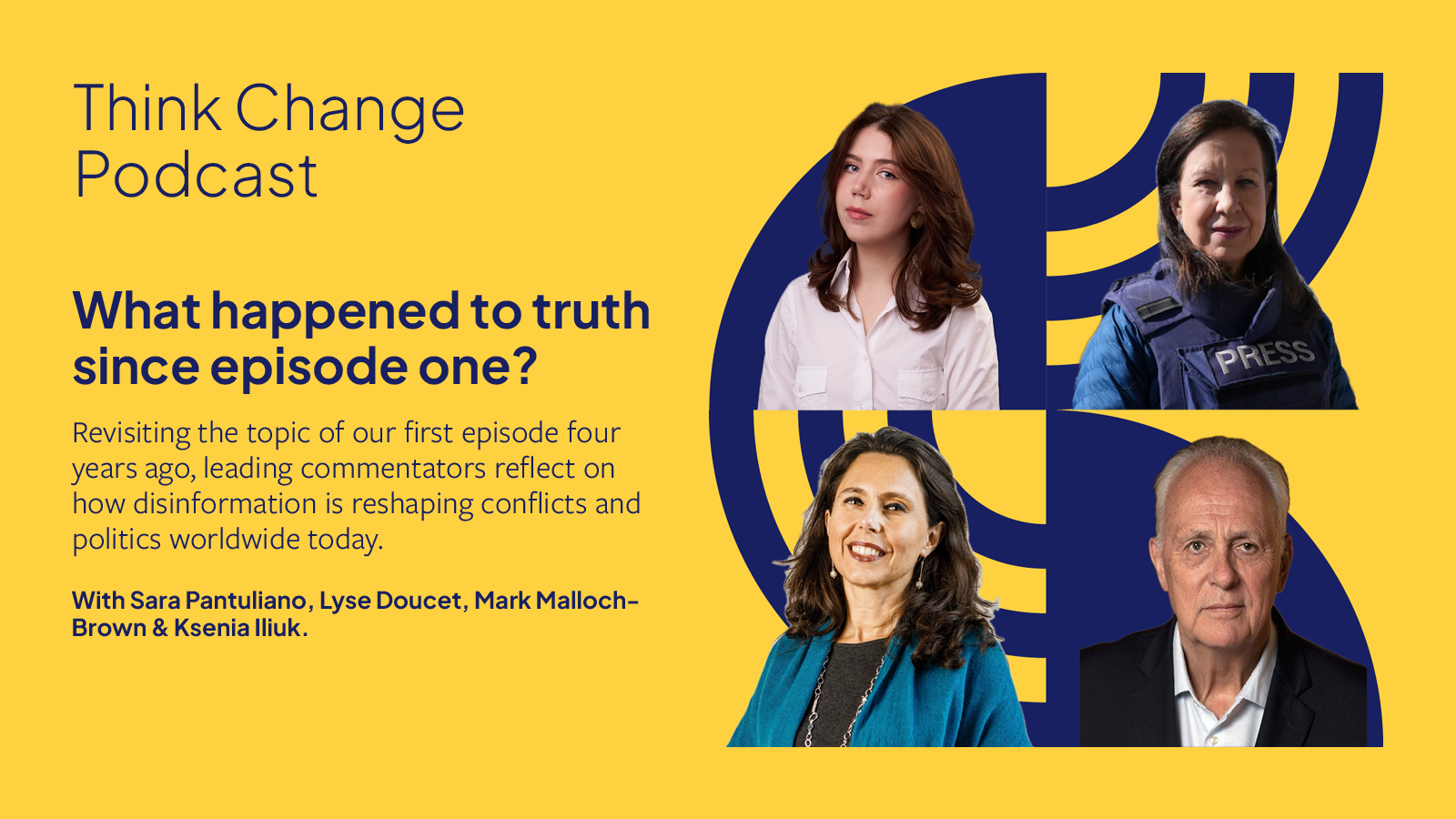
ODI in conversation with Mark Malloch-Brown
Mark Malloch-Brown, outgoing President of Open Society Foundations, joins our Chief Executive Sara Pantuliano for a candid conversation about the role of philanthropy for global good.
With a 30-year philanthropic legacy, Open Society Foundations is one of the world’s largest private funders working for justice, democratic governance, and human rights.
The conversation covers:
The role of philanthropy in a world of escalating conflict and crisis
The crisis of legitimacy facing the philanthropic sector
Trust-based giving, and new paradigms for philanthropy
Why bottom-up social movements and engagement with civil society are so critical.
Mark Malloch-Brown has worked to advance human rights, justice, and development for more than four decades in a variety of roles: with the United Nations, the World Bank, and as a British government minister, as well as with a range of civil society groups and business. He was knighted for his contribution to international affairs and is currently on leave from the British House of Lords.
[Re]Group. A Playbook for Turbulent Times

A Playbook for Turbulent Times is a platform for ideas and debate about the future of global cooperation. Open access to all, free of charge and free to share.
BBC Profile: Kristalina Georgieva
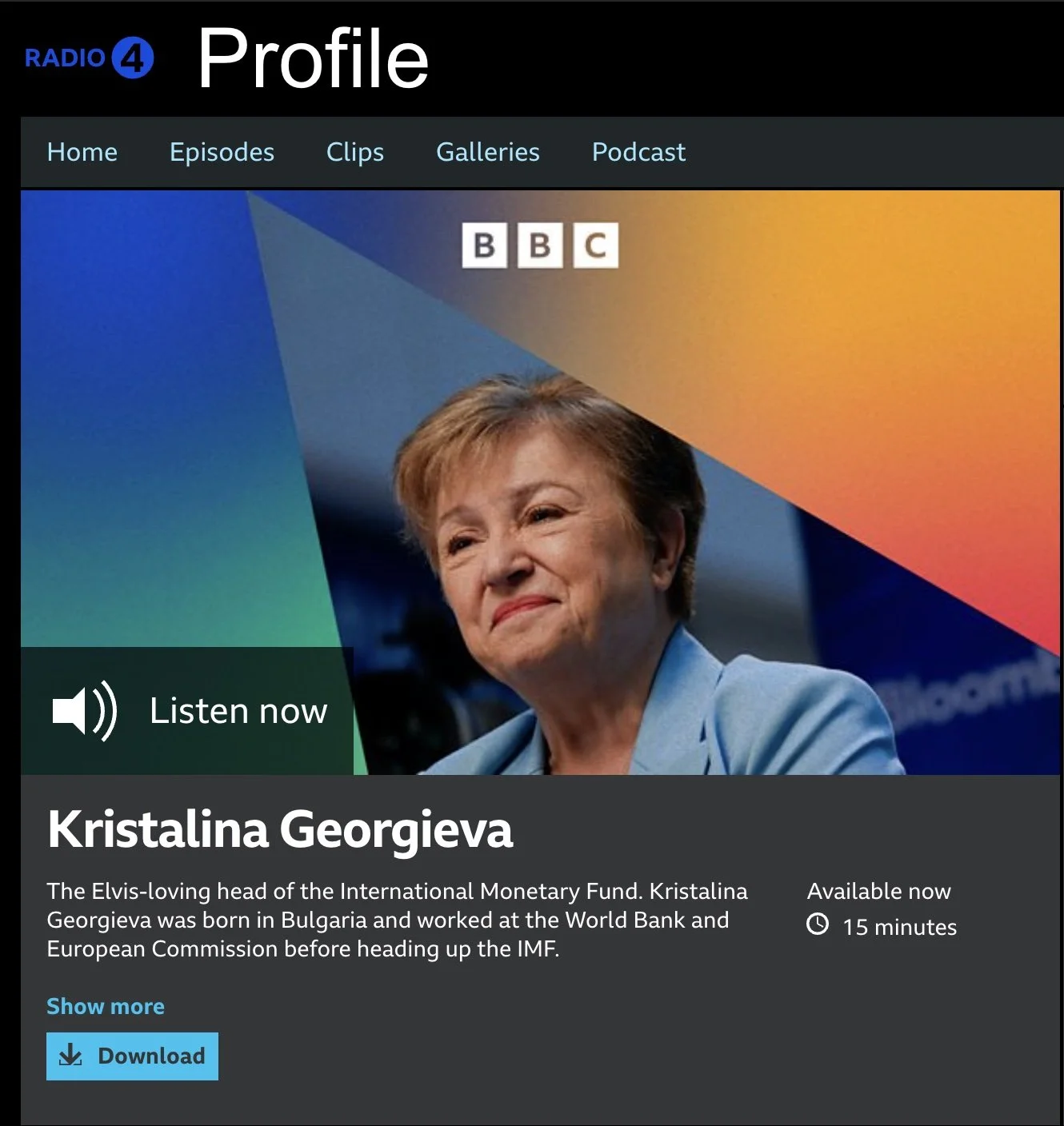
Becky Milligan explores Kristalina's life and career.
Kristalina Georgieva is not like previous heads of the International Monetary Fund. She grew up behind the Iron Curtain in Bulgaria, which was then part of the Soviet bloc.
Born in Sofia in 1953, her father was a civil engineer and her mother a shopkeeper. Life was tough because her family weren't part of the Communist Party regime. Her father fell ill when Kristalina was young and she was just fifteen when she went to work at the local food market.
She studied economics at the then Karl Marx Higher Economic Institute and then in the late 1980s she headed to London to spend a year at the London School of Economics. Over the last 30 years she's landed top jobs at the World Bank and the European Commission. In 2019, she was appointed managing director of the IMF, becoming the first person from an emerging economy to lead the institution.
In the rare moments when she's not working, friends, colleagues and family paint a picture of a fun-loving woman who likes nothing better than dancing and singing.
Contributors
Dessislava Kinova - daughter
Iliyana Tsanova - friend and Chief Risk Officer at the European Commission
Lord Nick Stern - friend and environmental economist
Lord Mark Malloch Brown - friend and former World Bank Vice President
Ivan Krastev - friend and political scientist
Galia Mintcheva - special adviser
World's Toughest Job. Exploring the challenges facing the next UN leader.
The United Nations secretary-general has been said to hold the “most impossible job in the world.”
Through immersive storytelling and voices from around the globe, World’s Toughest Job explores the challenges facing the next UN leader. Over eight episodes, we’ll examine how the secretary-general might make a difference on issues including economic turbulence, superpower rivalries, artificial intelligence, inequality, and climate change.
This is about more than the one person who will step up to lead an organization. It’s an existential moment for the UN, the one place where countries have a voice and a vote.Get it wrong, and we all feel the consequences. Get it right, and it could mark a turning point for the organization … and the world.
World’s Toughest Job is a co-production of Foreign Policy and the UN Foundation.
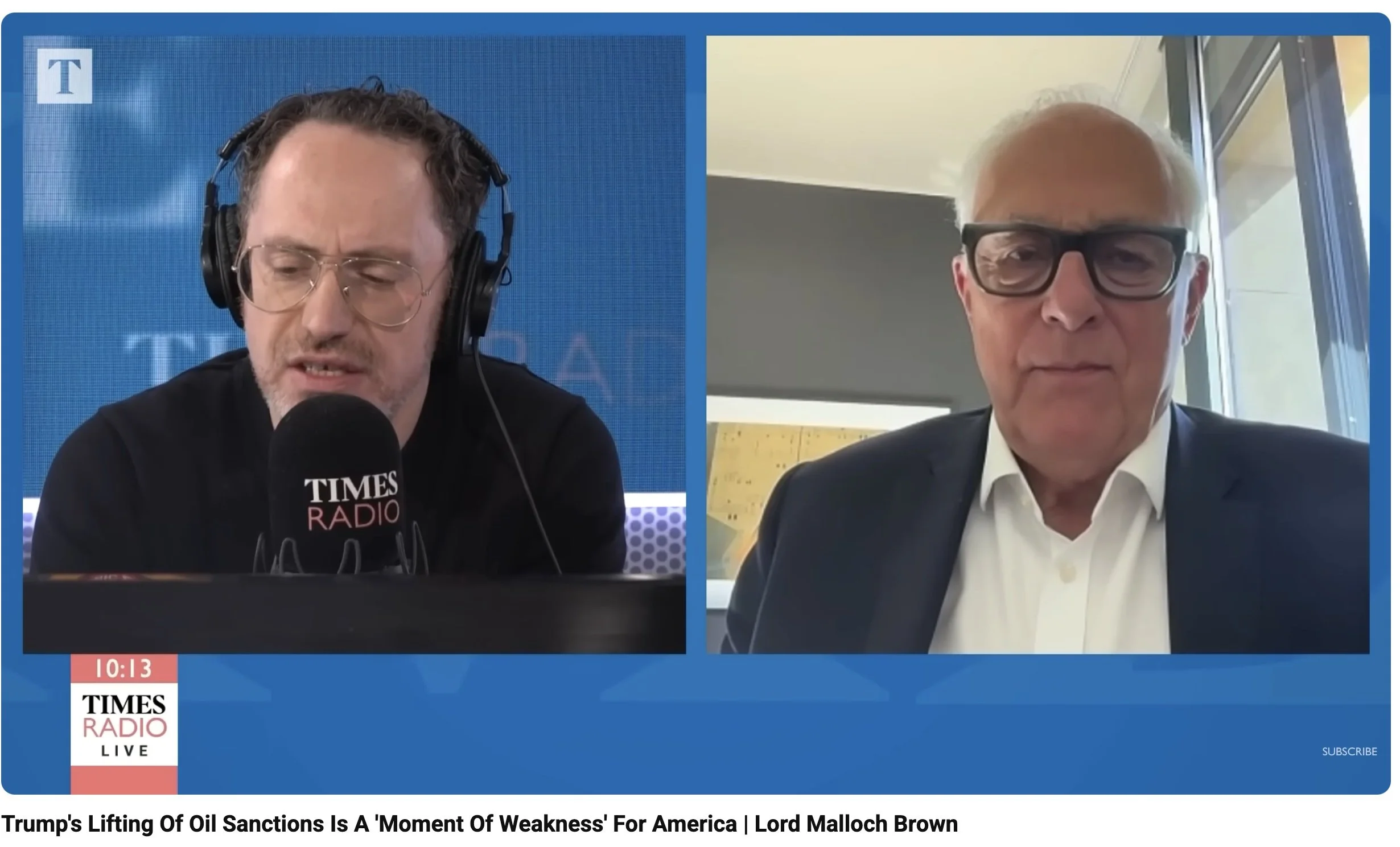
Times Radio. Trump's Lifting Of Oil Sanctions Is A 'Moment Of Weakness' For America
“It's America, in a sign of weakness in fact, having to concede this point because it needs oil from wherever it comes including Iran.”
Lord Malloch Brown was speaking to Hugo Rifkind on Times Radio.
ECFR's World in 30 Minutes: Bretton Woods institutions in a new world order
MMB on ECFR's World in 30 Minutes podcast
This week Mark Leonard is joined by Mark Malloch-Brown. Mark is the former president of the Open Society Foundations, former head of the United Nations Development Programme, formerly UN secretary general Kofi Annan’s chief of staff, and former UN deputy secretary general. From 2007-2009 he joined the British government of prime minister Gordon Brown as minister responsible for Africa and Asia.
Together, Mark and Mark discuss how the role and impact of the Bretton Woods institutions, such as the World Bank and IMF, have changed. How can these institutions adapt to the rough-and-tumble world of 21st-century geopolitics—especially considering China’s increased support for the Asian Infrastructure Investment Bank and projections that Asia will hold 50% of global GDP by 2035?
Is Mark Carney right that there is a rupture in the old order? How did the Bretton Woods institutions underpin the old order? Are the World Bank and IMF problematic and outdated? Is it possible to reinvent these institutions for a new era? Or is it better to work through new, more representative institutions?
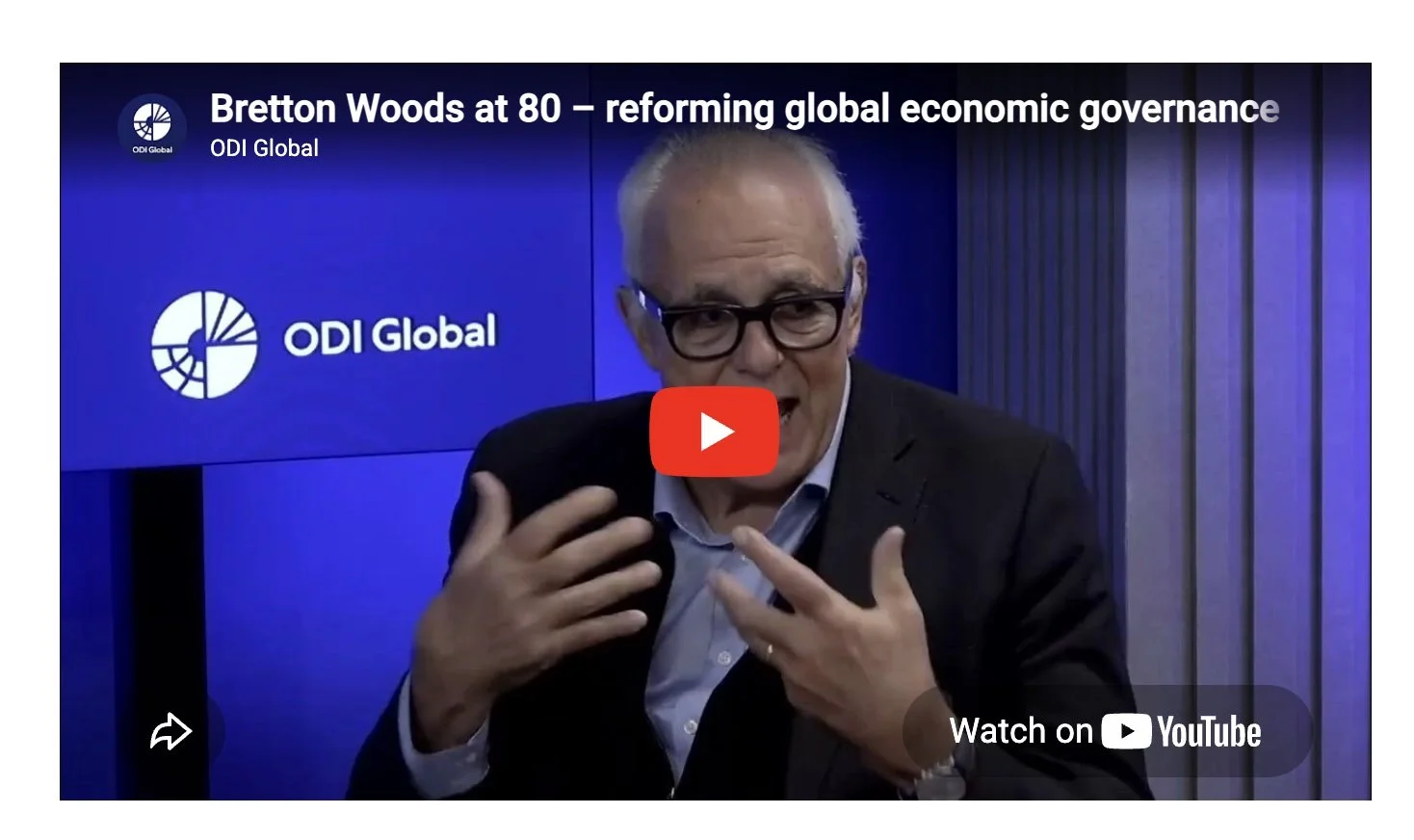
ODI: Bretton Woods at 80 – reforming global economic governance
Eighty years after the creation of the Bretton Woods institutions, the international economic system they underpin is under growing strain.
Geopolitical fragmentation, recurring financial and debt crises, climate shocks and rising funding needs from client countries are challenging the relevance and the effectiveness of these institutions and their global economic governance functions – and whom they ultimately serve.
This event examines the future of the International Monetary Fund and the World Bank, their relevance, legitimacy, and governance in a rapidly changing global context. It builds on the vision and recommendations of the Bretton Woods at 80 report and its core arguments, co-authored by Patrick Achi, Sri Mulyani Indrawati, and Mark Malloch-Brown.
You can access the report here: https://www.bwi80.org/
The panel explores two closely linked themes:
Is the Bretton Woods system still fit for purpose?
How relevant are the World Bank and the IMF to today’s client countries as they face overlapping development, fiscal and climate pressures? How do these institutions fit within an increasingly complex development finance landscape that includes regional and national development banks, bilateral lenders and private capital?
Governance and voice at 80
What reforms are needed to strengthen representation, voice, accountability and legitimacy within the Bretton Woods institutions, particularly for countries in the Global South? What political and institutional constraints limit the scope for change?