
Media
In the media
‘Let the old politicians run against you. It will restore your political independence and make you unbeatable.’
Lord Mark Malloch-Brown is an international affairs commentator, author and keynote speaker whose media work explores geopolitics, global governance, international development, political change and the changing world order. This page brings together his interviews, podcasts, articles, books and other media appearances.

In the Media
The Observer UK: The aid vacuum- poor countries will have to adapt as loans replace grants
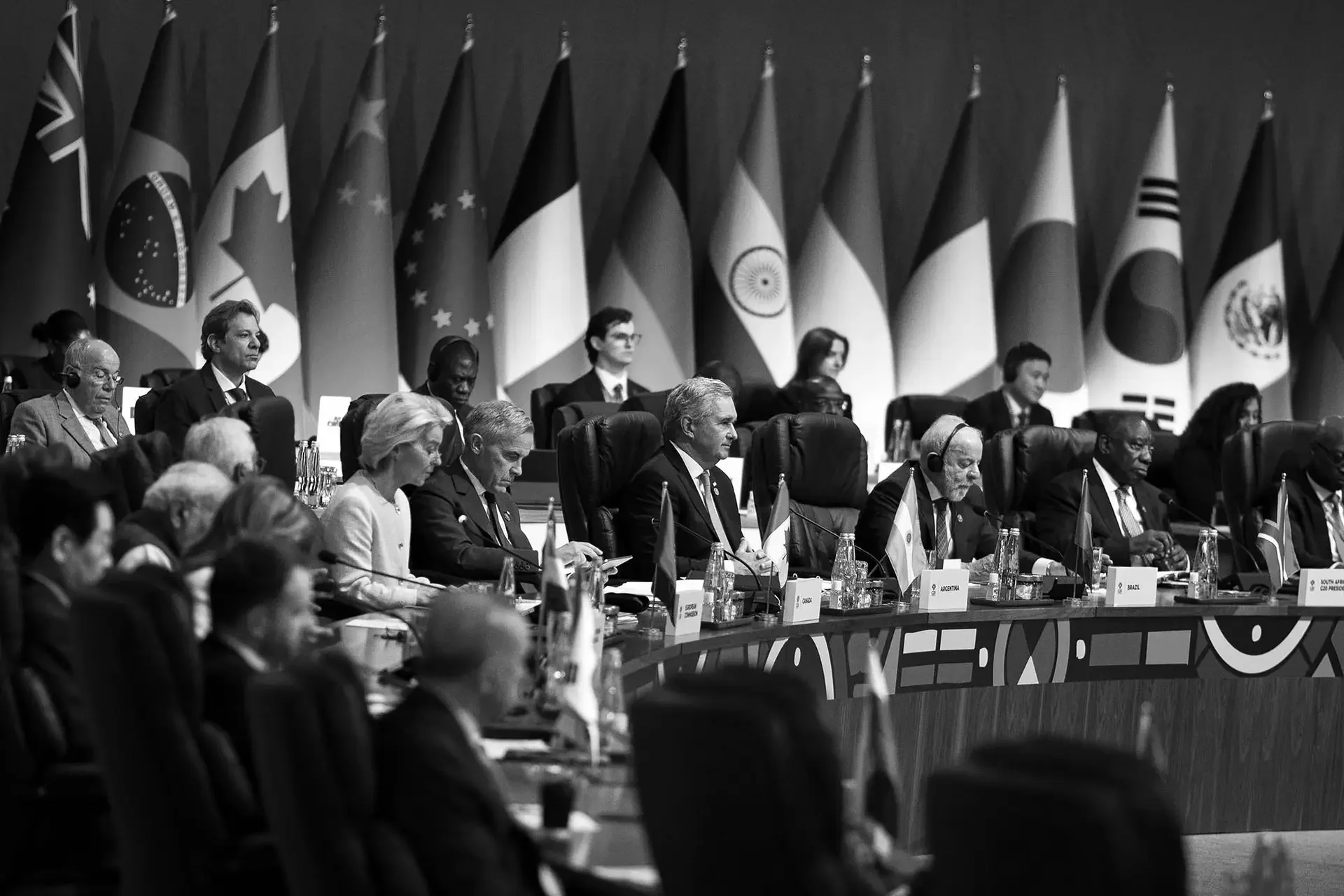
As developing countries struggle with budget cuts, will private investment and debt fill the hole?

Facing Up to the Future: Navigating Disruption, Building Trust
BWI at 80 report - Facing Up to the Future: Navigating Disruption, Building Trust
BWI at 80 website
Over the past eighty years, the Bretton Woods Institutions (BWIs) have contended with dramatic changes in the world, including shifts in the economic performance and standing of different nations; decolonisation and the fall of political systems; a demographic explosion; and a world economy that has grown twelve-fold.
The two institutions now find themselves on the frontline of a central contradiction of the contemporary world: economic systems are more globally integrated than ever – a legacy in part of that original Bretton Woods vision – but this integration has not prevented conflict. On the contrary, the world is experiencing more wars and related loss of life than at any point in recent decades. The national political institutions that once safeguarded this eighty-year journey towards an open world order now appear overwhelmed by the backlash, with people across the world increasingly viewing the multilateral system as a threat to their livelihoods and way of life. The implications for the free-market, open-border paradigms of development that the BWIs embraced are becoming stark.
Despite the challenges, the BWIs remain uniquely positioned to lead a new approach. They still offer scale, credibility, and technical expertise - but their continued relevance is not assured. It must be earned - not only through delivery, but by aligning with the evolving expectations of countries that are increasingly looking beyond traditional donors. The BWIs have competition. In a world of competing frameworks and rising power centres, legitimacy, we heard frequently, will depend on responsiveness, performance, and even-handedness across political lines.
Following a year of global consultations with ministers, civil society leaders, financiers, and practitioners, the message was clear: the BWIs must listen more, navigate today’s geopolitical complexities with care, and resist taking sides. Above all, they must put individual countries first - not the political priorities of any influential shareholders.
The three mutually reinforcing priorities emphasised in this report – country ownership, scaled up finance, and modernised governance – are not standalone objectives. They are interdependent, and each is indispensable to effective reform. In an era of heightened risk and volatility, centring the country as the fundamental unit of development is not merely a defensive strategy to build resilience. It reflects a deeper truth, borne out over eighty years: the BWIs’ success depends on that of their member countries – not the reverse.
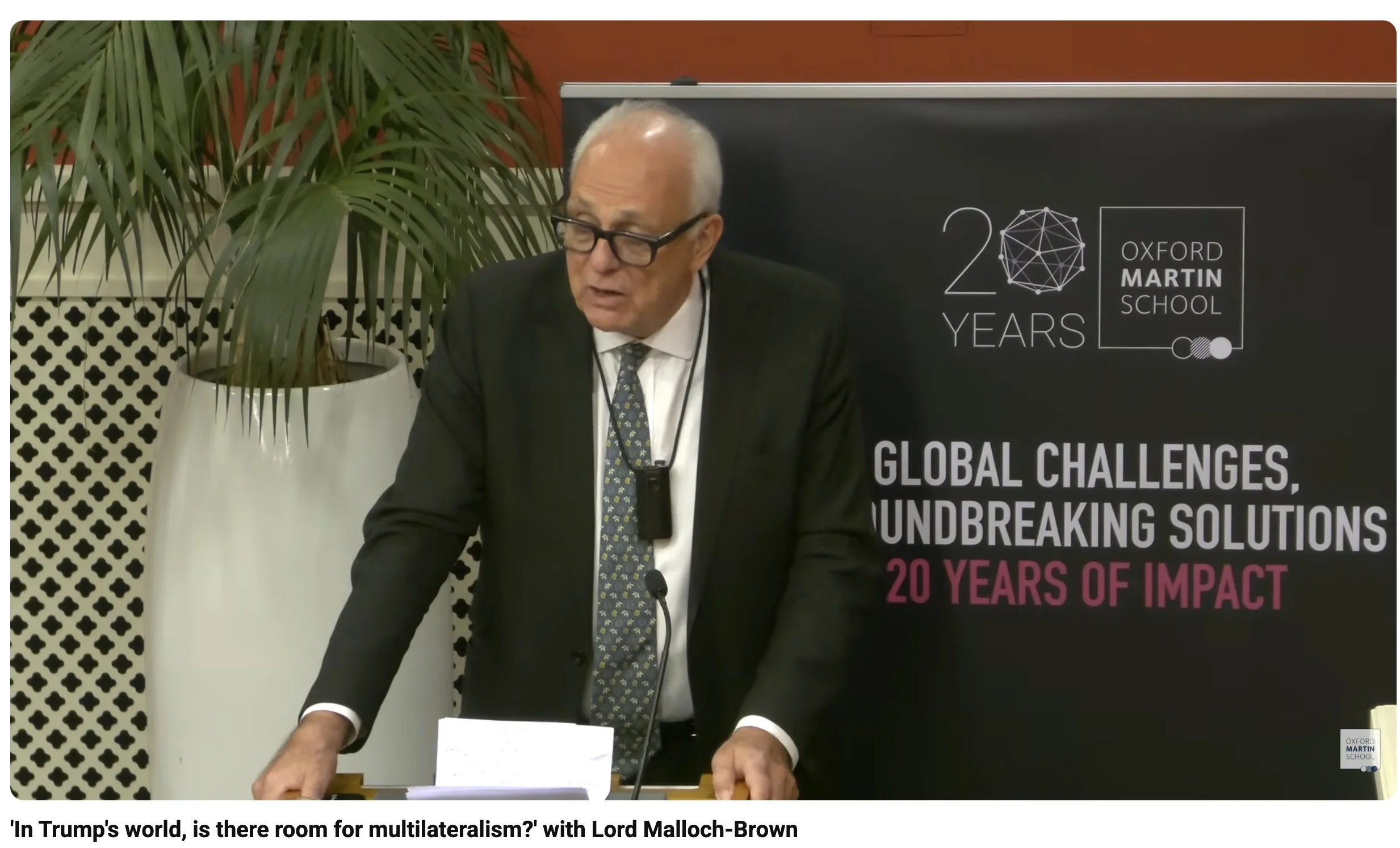
Talk at Oxford Martin School
'In Trump's world, is there room for multilateralism?'
The last year has been marked by a dramatic turn away from multilateral cooperation towards the assertion of national interest. Many attribute this directly to the re-election of President Trump, and while he is the most prominent spokesman and catalyst for this change, the talk will trace how the US move away from multilateral cooperation began much earlier. This shift is also not limited to the US, as other countries also focus on the promotion of national interest over international solidarity.
A phrase that has been used to describe the new condition of international politics is: "multipolarity with Trump characteristics." This deliberately borrows from an earlier apparent conversion of the multilateral system to one where China played a much more important part. That competition between the US and China is now playing out across a range of international political and trade issues, including leadership in institutions such as the United Nations and BWIs. And as these rivals tussle for influence, a range of new emerging powers such as Brazil, India, South Africa and others demand a greater role. They, together with many smaller countries, fear the collapse of the multilateral value system associated with rule-of-law. The talk will describe this three way tug of war for influence and its likely outcomes.
The New Statesman: The UN’s last believer
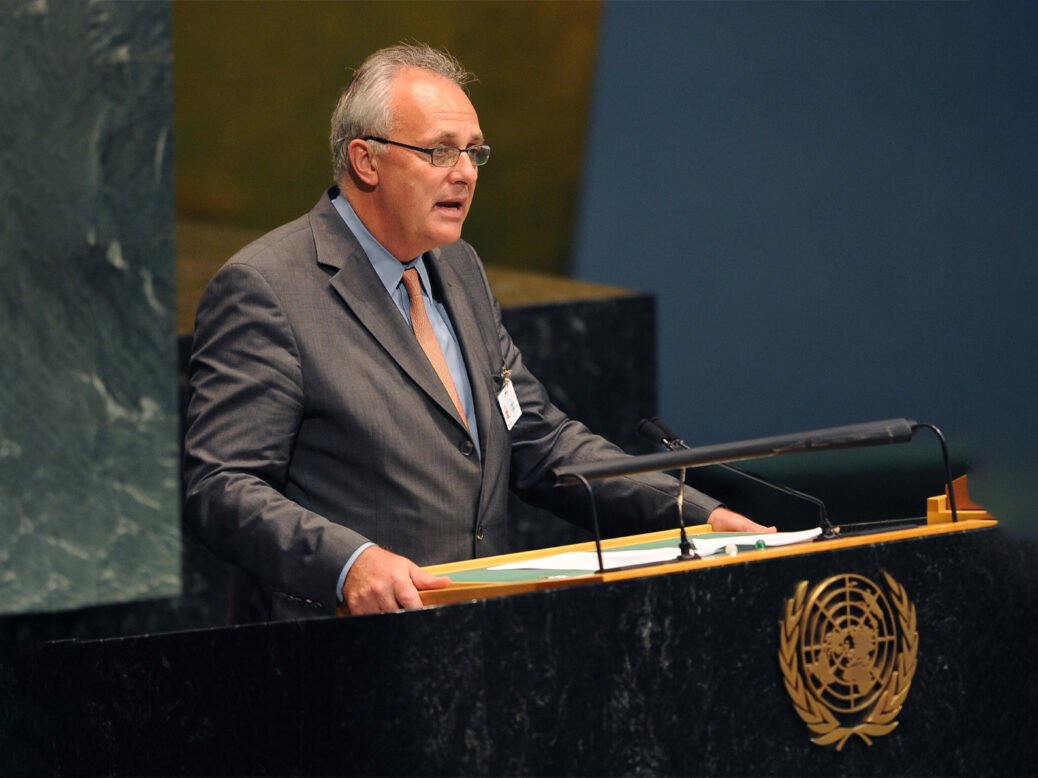
Mark Malloch Brown is convinced diplomacy still matters

Times Radio: Trump’s ‘real test’ starts now: Will he stick around for end of Gaza crisis?
“This will be a real test of whether Trump can change gears, get his head down, and stick with something.”
The “hard part” of resolving the conflict between Israel and Gaza starts after the hostages are returned, as there is yet to be an agreement around how Gaza will be governed, says former UN deputy secretary-general Mark Malloch Brown.
The Observer UK: The UN must get back in the ring and fight
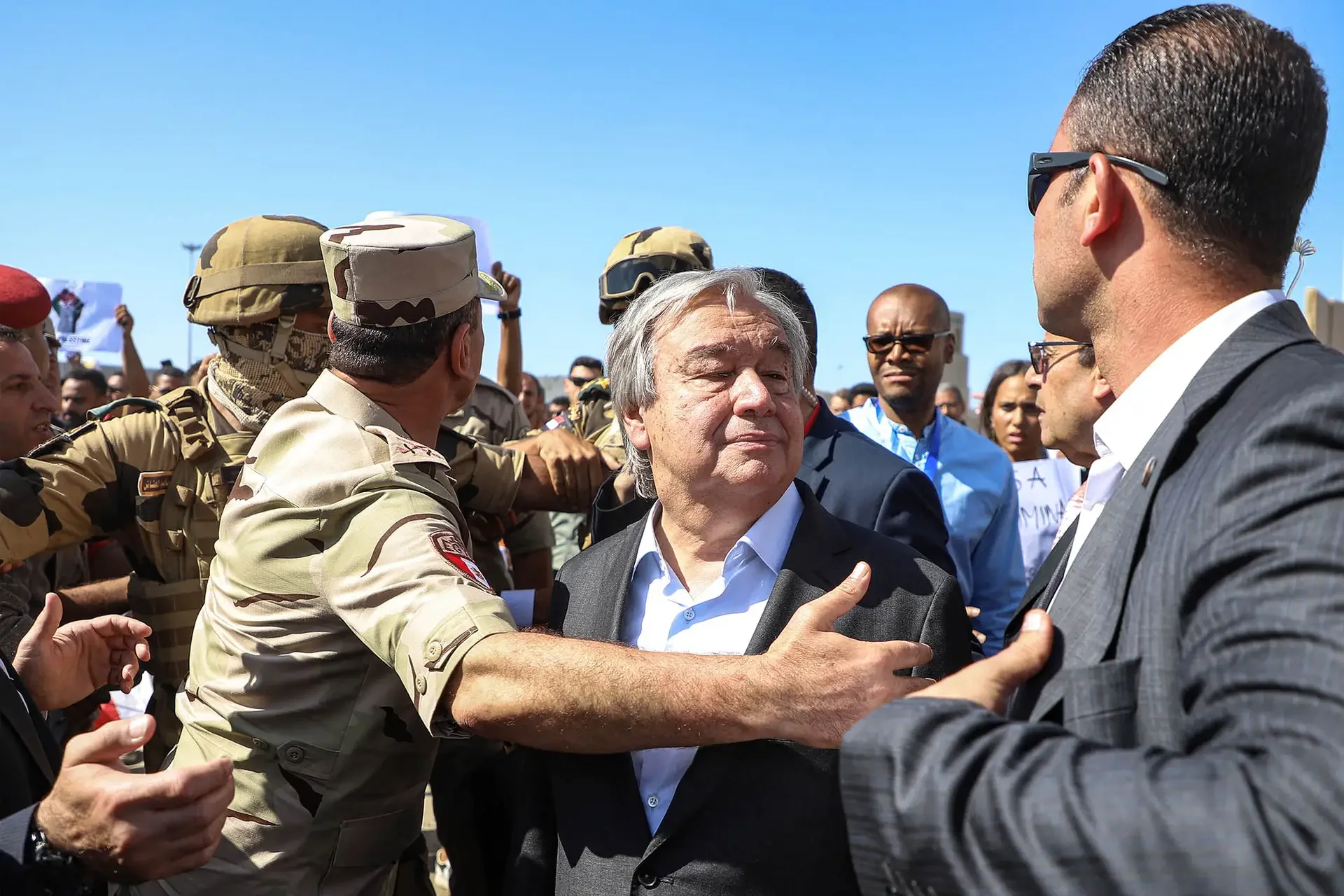
The institution has been paralysed by a hostile US government – but the world needs it to keep the peace
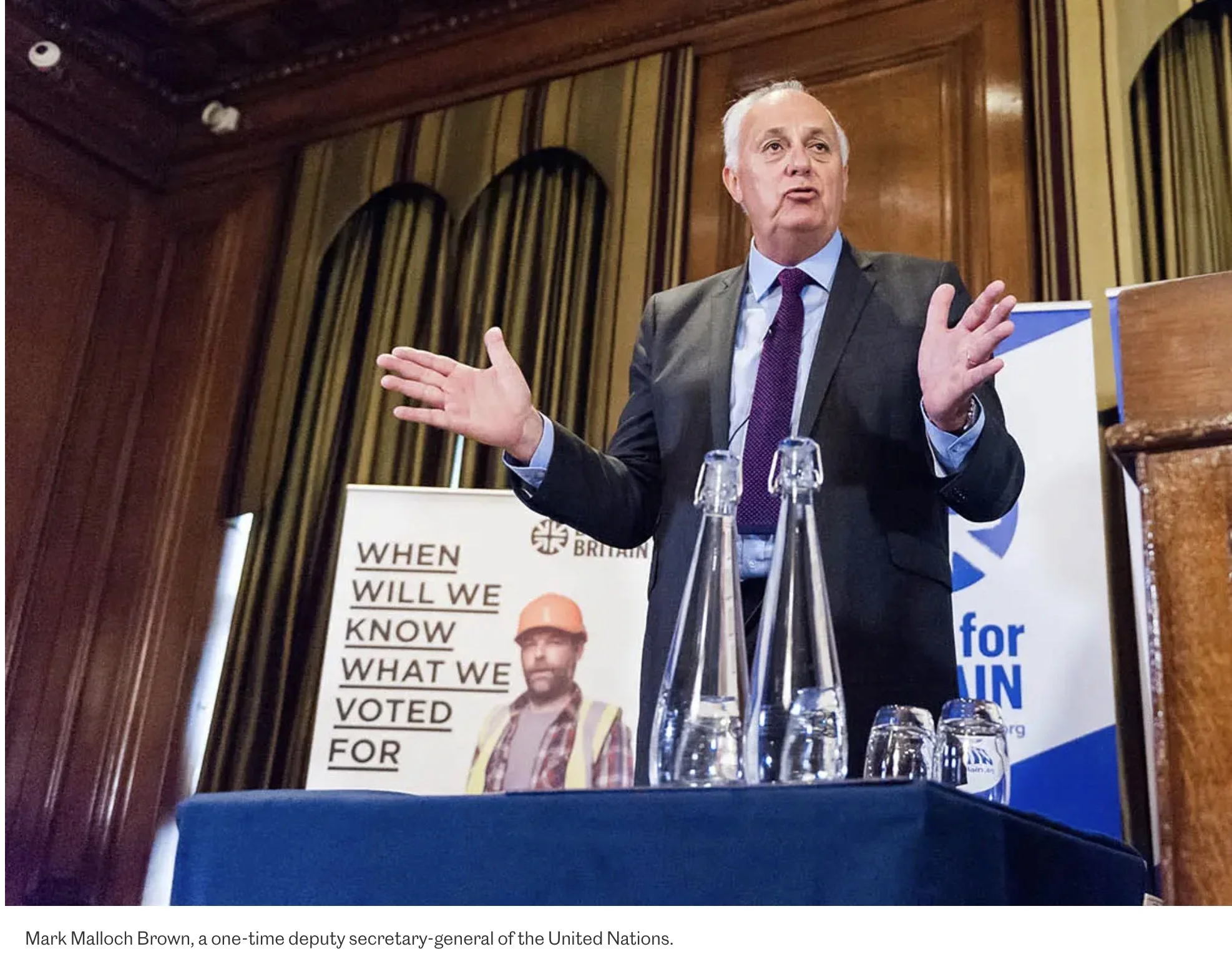
The Observer UK: The diplomatic scales are tilting towards recognition for Palestine
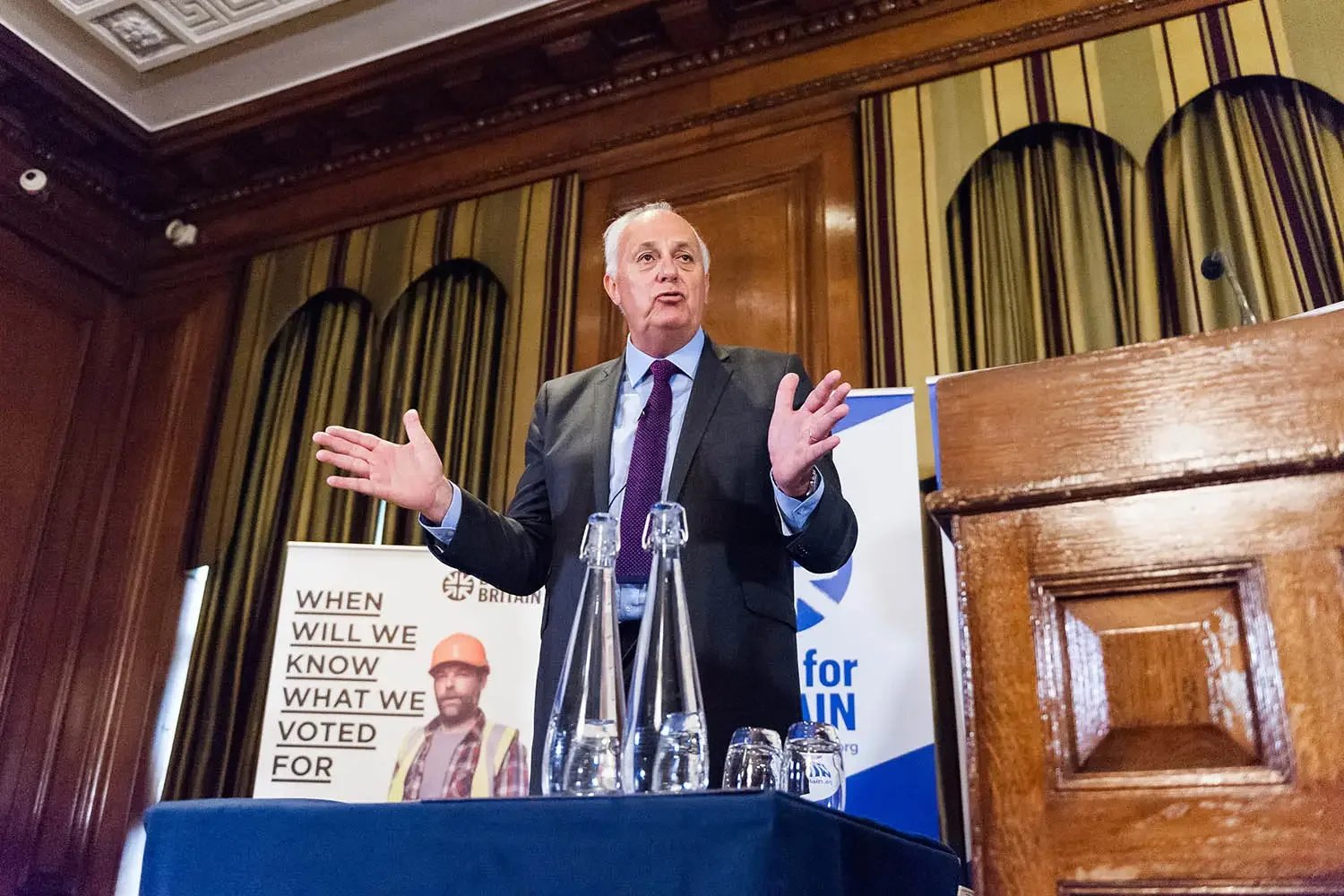
Even the moderate career diplomat Malloch Brown says Israeli war crimes are condemning the country to pariah status

Times Radio: Trump's failures 'catching up with him' on Saudi trip
"He’s surrounded himself with a very inexperienced team... and it's catching up with him."
The Unfinished Global Revolution
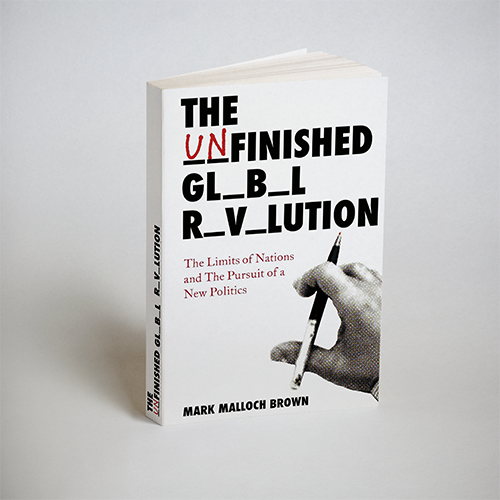
The Limits of Nations and The Pursuit of a New Politics
The Unfinished Global Revolution is a front-line view of the challenges of leadership and the importance of creating greater global cooperation.
The former United Nations Deputy Secretary-General, Mark Malloch-Brown diagnoses the central global predicament of the 21st century. As we have become more integrated, we have also become less governed. National governments are no longer equipped to address complex global issues. From climate change to poverty, international organizations have not yet been empowered to step into the breach.
The Unfinished Global Revolution chronicles how over the past few decades, domestic problems - from unemployment to environmental distress - have international roots. Increasingly, ad hoc arrangements between NGOs, civil society and the private sector are filling in the gap created by the failures of individual governments. Malloch-Brown urges us to embrace these evermore powerful international institutions and the values needed to underpin a truly globalist agenda - the rule of law, human rights, and greater opportunity for all. Now is the moment for creative statesmanship to form a new approach to global politics, one that will produce stronger international institutions that revive rather than replace national governments.
Malloch-Brown has been at the centre of recent world events. Drawing on his experiences at the frontlines of international development - from Cambodia to Darfur, Washington to UN headquarters - Malloch-Brown provides a personal, on-the-ground view of seemingly abstract challenges and forecasts the way forward in global politics. This book should be required reading for all policy makers, politicians and concerned citizens of the world.
Rich in both analysis and recommendations, Mark Malloch-Brown deploys his enormous talent and shrewd understanding of the forces that are shaping our world to argue for stronger, more inclusive global institutions. Drawing from a wealth of personal experience on the frontlines of world affairs, Mark's book is authentic, compelling and immensely enjoyable. His message should resonate in national and international discourse for years to come. — Kofi A. Annan, United Nations Secretary-General (1997-2006)
In this wise and passionate book, Mark Malloch-Brown draws on his remarkable experience at the global frontlines to illuminate both the challenges of international governance and the reasons why we cannot afford to give up on it. — Queen Noor
Mark Malloch-Brown is one of those rare statesmen who is also a public intellectual. This book combines these two qualities, making for a fascinating and important read. — Fareed Zakaria, Editor-at-Large, Time, and author The Post-American World
The provision of international public goods will be a defining issue of the 21st century. This rare view from inside the kitchen shows why it is such a daunting challenge. — Paul Collier, author of The Bottom Billion
In this exemplary memoir of an exemplary global life, Mark Malloch-Brown has put the phenomenon of globalization and the challenges it poses for national and international governance into an historical, ethical, and prescriptive context that makes this a handbook for understanding and shaping our world. — Strobe Talbott, author of The Great Experiment
Mark Malloch-Brown, who had the advantage of working closely with Kofi Annan, is a man of extraordinary talent. This book demonstrates that he is one of the most influential thinkers today on how to cope with the globalization that is rapidly transforming the world economy. This is an important book; it is in fact a tour de force. — Jagdish Bhagwati, University Professor at Columbia University and author of In Defense of Globalization
The clash that will really matter, contends Mark Malloch Brown in this admirable book, is between international co-operation and old-fashioned nationalism...The author's conclusions remain cautiously optimistic. With every international agreement...we may be moving...towards the global revolution he advocates so eloquently. — The Economist
A distillation of thoughts about the need for international institutions and politics to rise to meet global challenges...What is attractive about Malloch Brown's book is the combination of detail, authority and humility derived from decades of trying to make international co-operation work. — Alan Beattie, Financial Times
A rather extraordinary debut: part autobiography, part political tract, part polemic, all bound together by a pilgrim's progress of learning experiences...You won't find a more stimulating thesis around this year. It's passionate, perceptive and rooted in years in the trenches of global strivings. — Peter Preston, The Observer
This, after three decades of international toil, is [Mark Malloch Brown's] first book, and a rather extraordinary debut: part autobiography, part history, part political tract, part polemic, all bound together by a pilgrim's progress of learning experiences... You won't find a more stimulating thesis around this year. It's passionate, perceptive and rooted in years in the trenches of global strivings — Peter Preston, Guardian
Rachman Why We Need the UN
Gideon talks to Mark Malloch-Brown, former deputy secretary-general of the UN, about the role of the United Nations. While it sometimes struggles to make an impact on matters of global security, it plays a unique and often unrecognised role in shaping policy on migration, refugees and climate.
Why Philanthropists Should Be Heretics

Donors Must Challenge, Not Comfort, the Existing Order

2024 ML Outlook
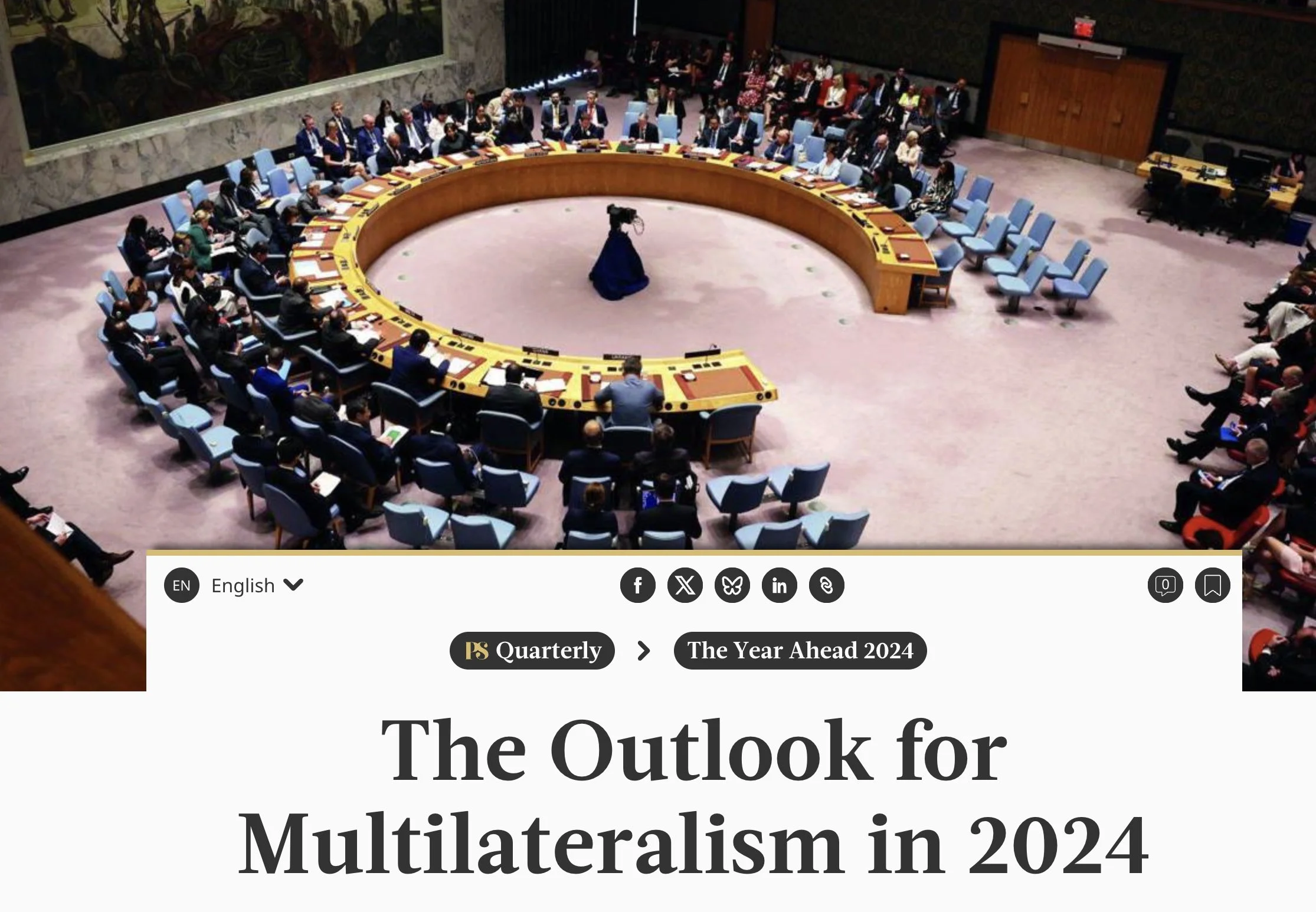
The coming year may determine whether the international community is still capable of marshaling coordinated, united responses to shared global problems through collective decision-making bodies such as the United Nations. With wars, conflicts, and other crises spreading, the stakes may be higher than ever.
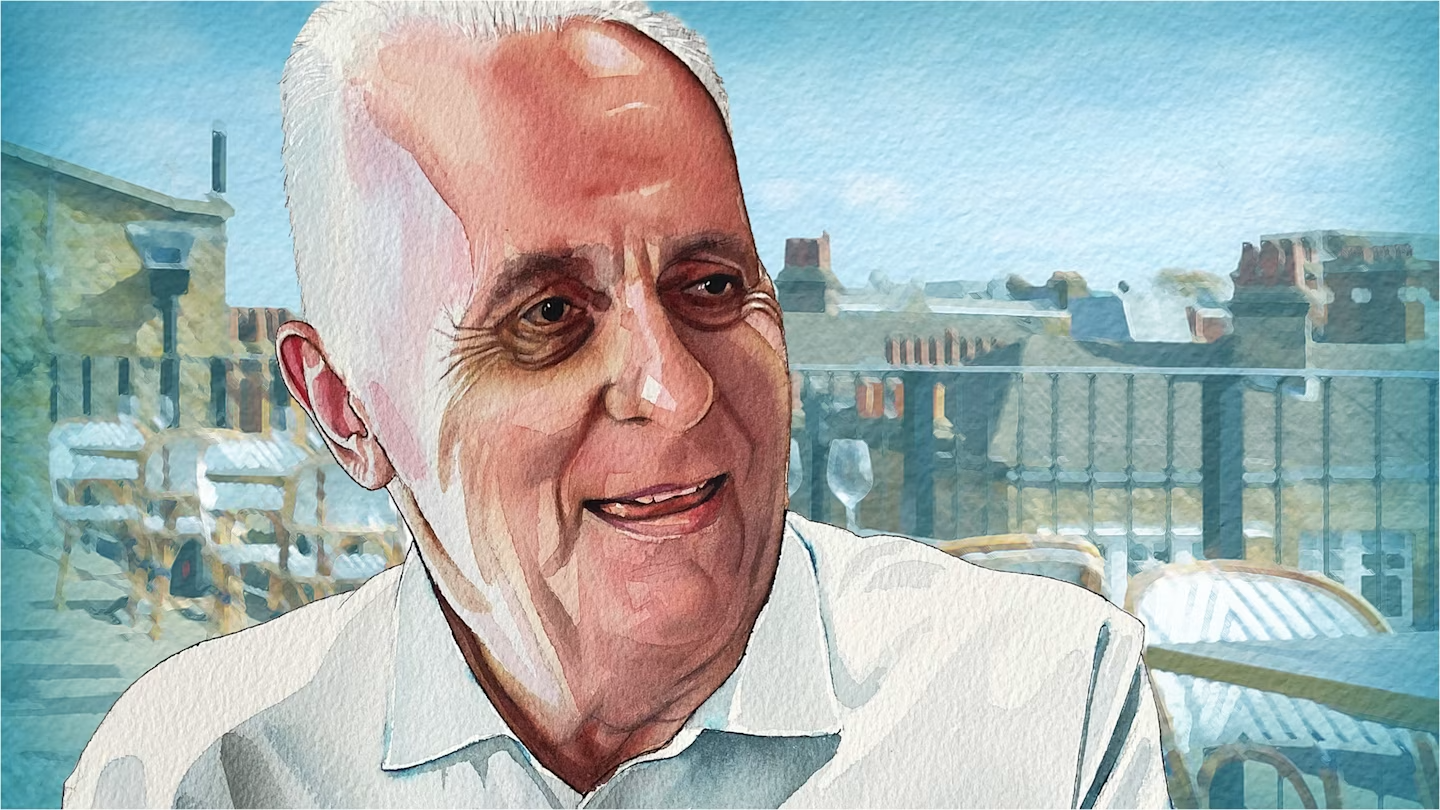
Lunch with the FT: Reflections from 'Lord Global'
Open Society president Mark Malloch-Brown: ‘Obviously “Lord Global” got that wrong’

What is the point of the UN if it can't stop Putin?
Times Radio on YouTube
Matt Chorley is joined by Lord Malloch Brown, KCMG PC - a British diplomat, communications consultant, journalist and former politician who has served as president of Open Society Foundations since 2021.